In-depth markets. Risky decisions.

Can’t take risky decisions if you can’t define risk.

A stock trading and corporate control game with an in-depth simulated economy and markets. Trade stocks, sell short, buy bonds, use options and futures, build hedges, acquire companies, and run what you buy.

In development for PC

Gameplay and simulation features

  • MarketSimulator case dossier connecting a company contract event to public evidence, market returns, operating-margin changes and the live news wire.

    World and events: A procedural world with real economic consequences.

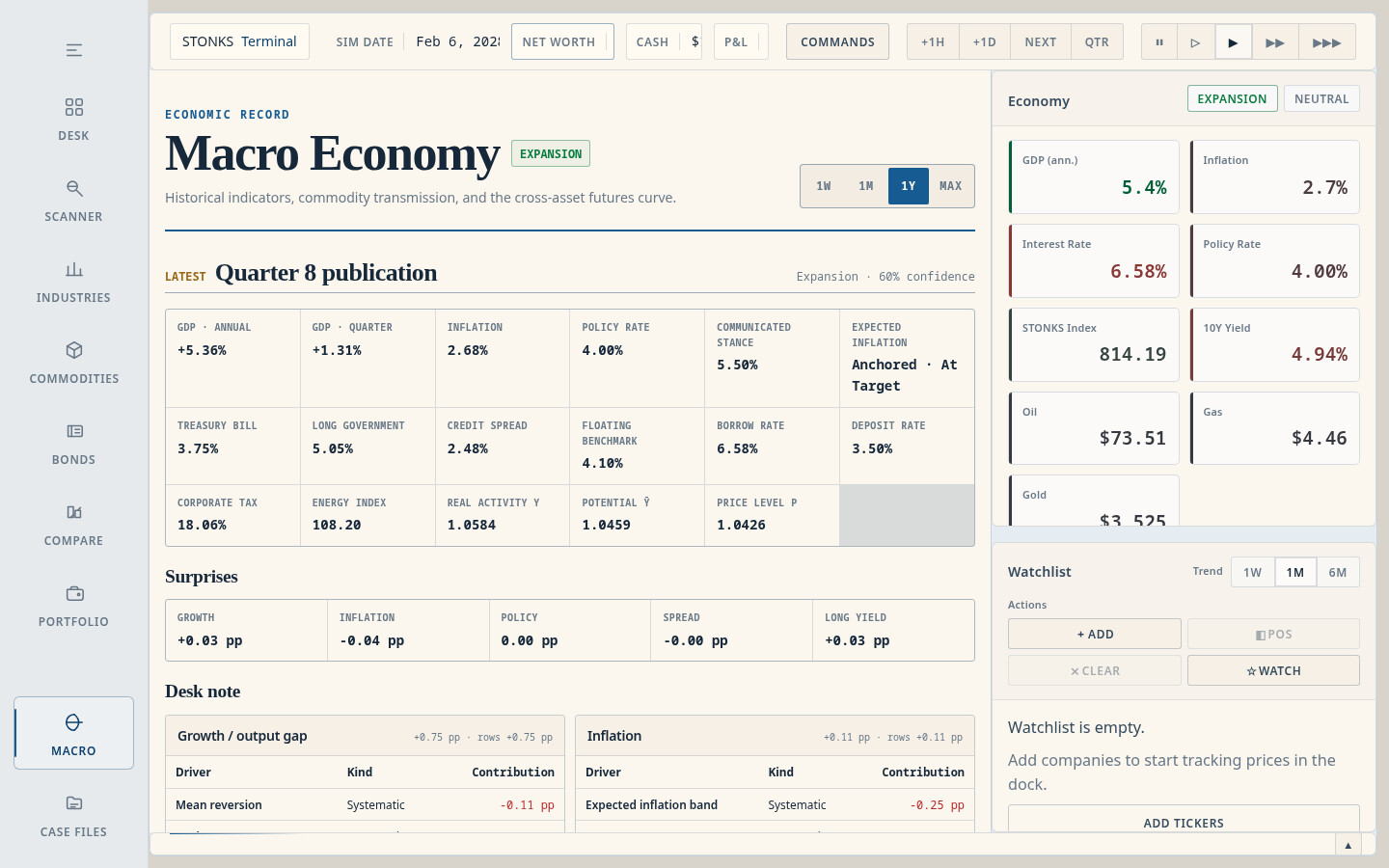
    A war can move energy and defence. An earthquake can break a supply chain. A technology boom can redraw demand. Work out where the consequences land and what, if anything, you want to do about it.
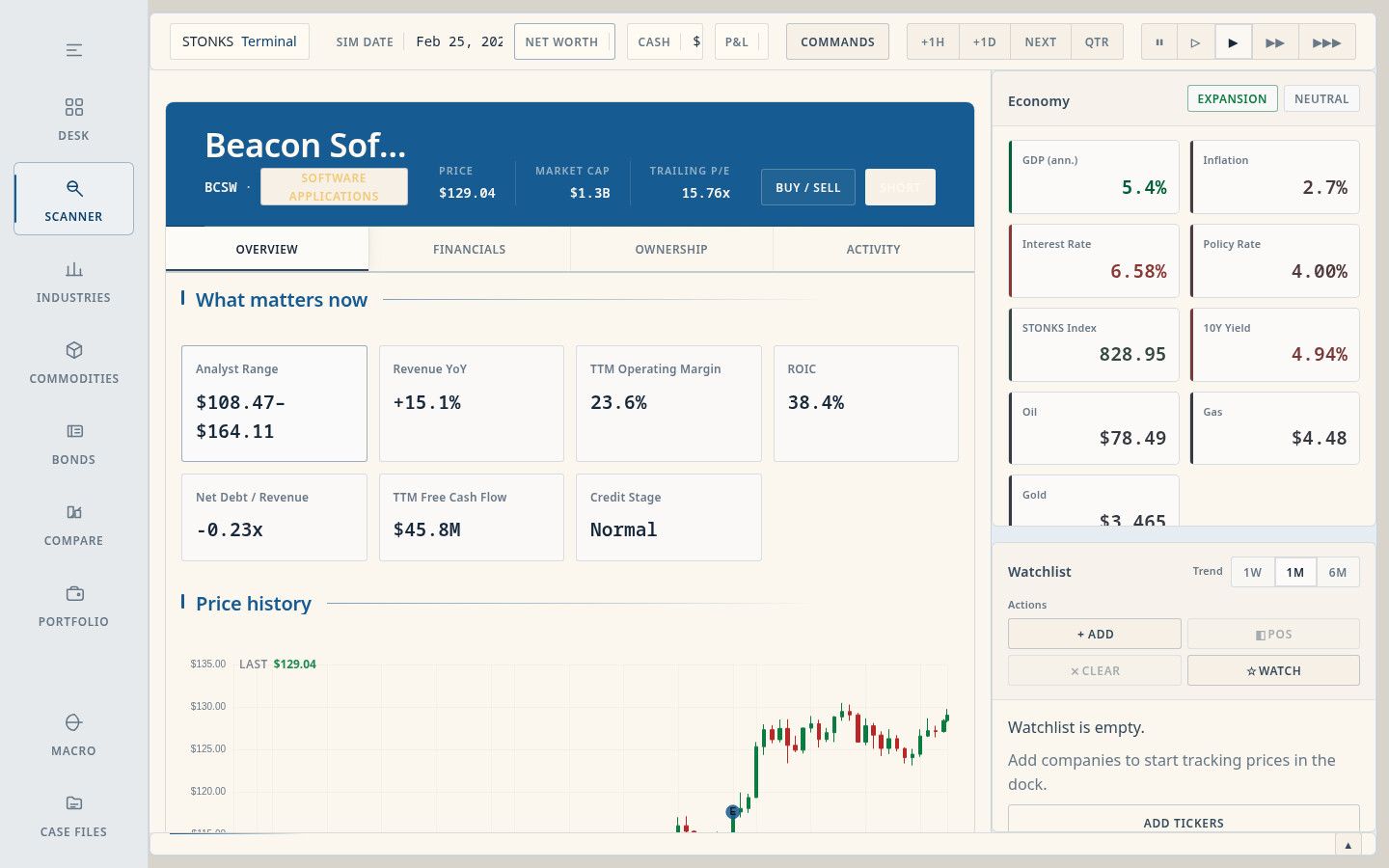
  • MarketSimulator Delta Software stock chart with candlesticks, earnings markers, valuation metrics and Buy / Sell and Short actions.

    Markets and instruments: Stocks, bonds, options, commodity futures and index futures.

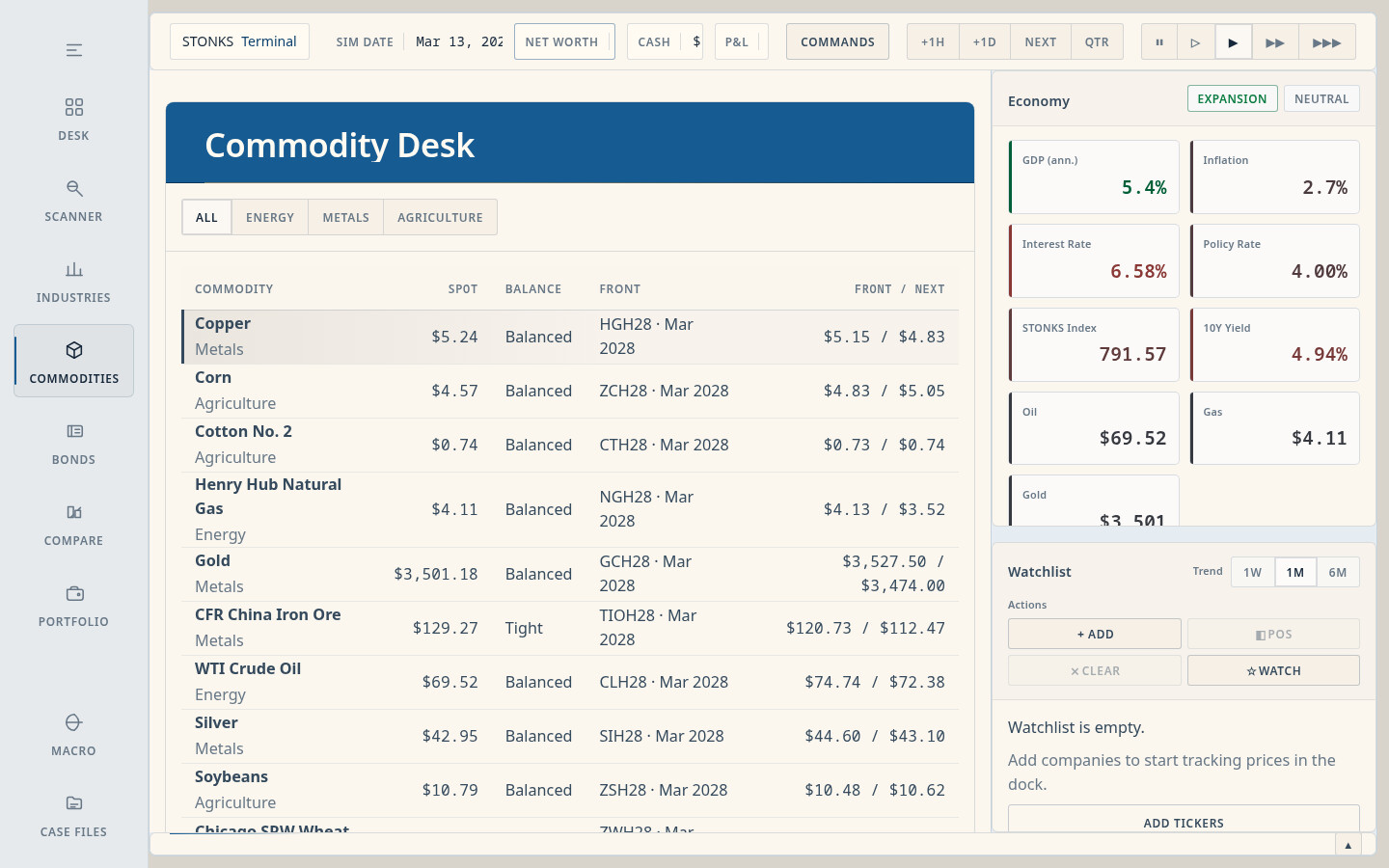
    Buy and short stocks, trade company bonds, options, commodity futures and index futures, and combine positions across markets. Build a hedge, isolate the risk you actually want, or construct something complicated enough to require an explanation.

  • MarketSimulator Harbor Petroleum control screen with capacity, capability, commodity hedging and shareholder-return policies.

    Company control: Take control and operate companies.

    Build a controlling stake, then set operating plans, dividends and buybacks; issue shares or bonds; split the stock; or make a tender offer. Change the company to your advantage: improve the business, reshape its capital, or make it fit a larger portfolio strategy.

  • MarketSimulator Biotechnology industry dossier showing structural profile, demand, capacity, utilization, operating margin, capability cycle and shortage conditions.

    Coming soon

    Industry economics: Unique economics for every industry.

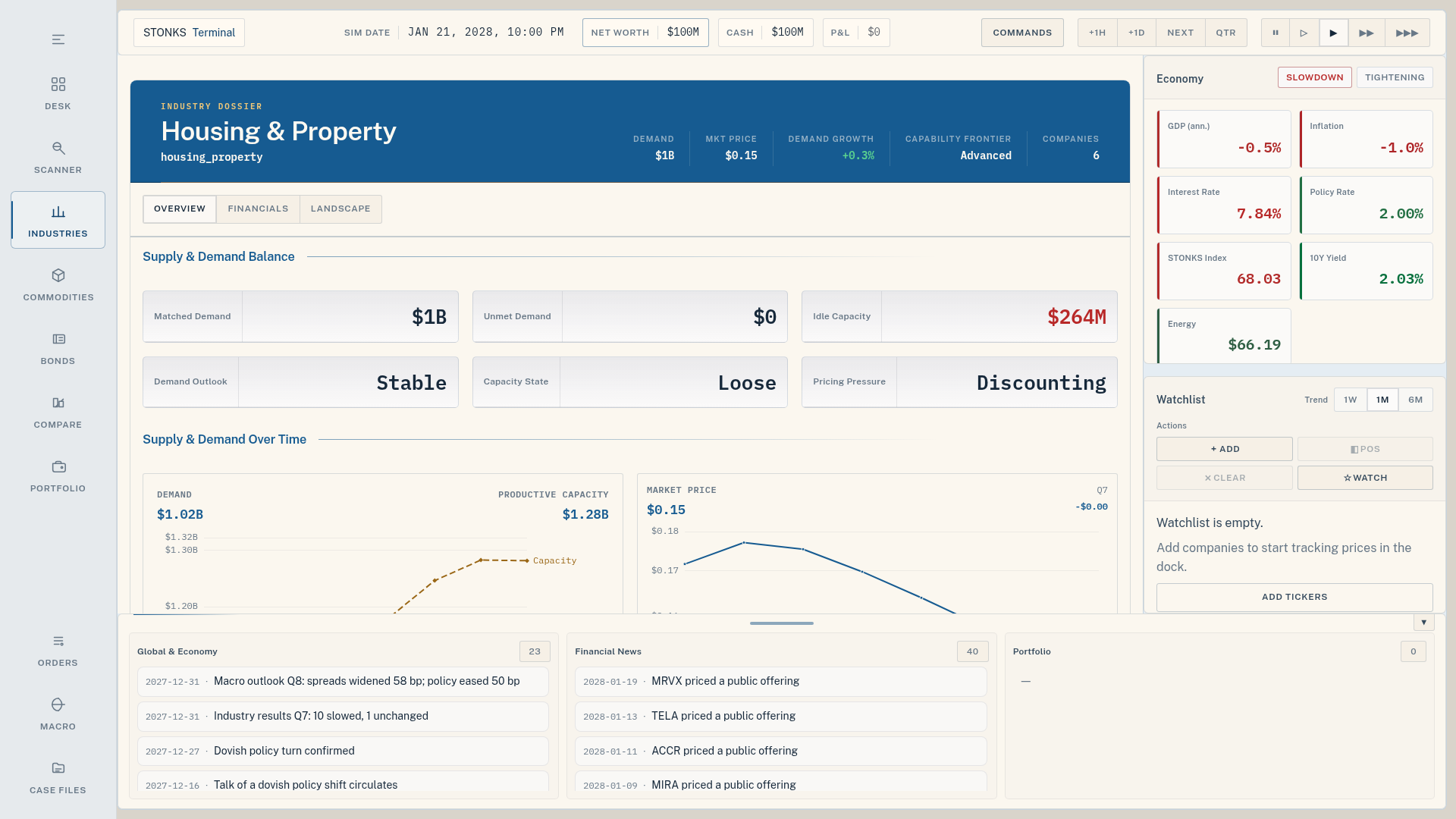
    Each industry gets its own supply and demand, capacity, pricing and cost mechanics, along with its own links to the macroeconomy and commodity markets. Oil, software, banking and retail become genuinely different parts of the same economy.